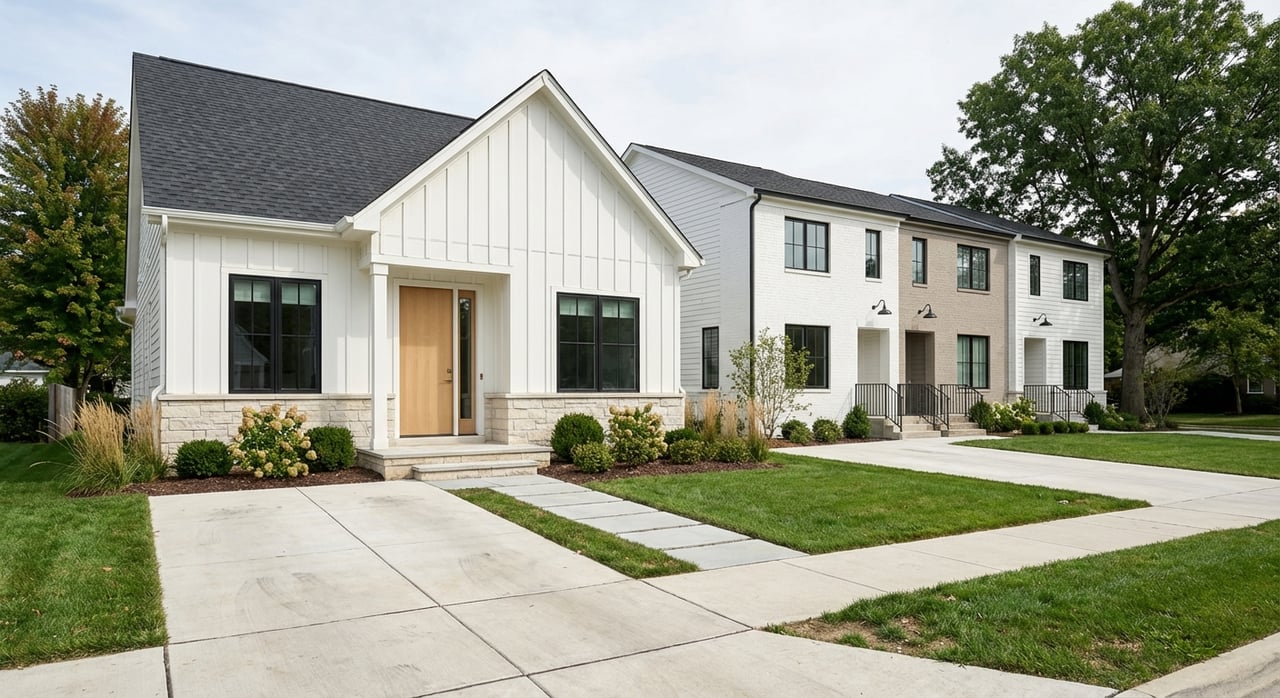
Stuck between the ease of a townhome and the freedom of a house in Troy? You are not alone. With prices, HOA fees, and lifestyles that vary by neighborhood, it can feel hard to line up what you want with what you can realistically maintain. In this guide, you will compare townhomes, condos, and single‑family homes in Troy so you can match your budget, routine, and long‑term plans. Let’s dive in.
Troy market snapshot
If you are focused on Troy, you are shopping in a stable, suburban market where inventory and pricing shift by ZIP. Recent portal snapshots show a typical Troy home value near $440,080, with median list prices in a similar range and roughly a month on market. Townhomes and condos often carry lower sticker prices than larger single‑family homes, but the cost per square foot can be close. What matters most is the exact neighborhood and property type, so plan to compare current MLS comps in 48083, 48085, 48084, and 48098.
Property types explained
Ownership and governance
- Single‑family home. You typically own the house and the land (fee simple). You control exterior choices and take care of the roof, siding, driveway, and yard. Some areas have an HOA for common spaces, but you usually manage your own exterior.
- Townhome. You get a multi‑level layout and usually an attached garage, with one or two shared walls. In Troy, many townhomes are legally condominiums, while others are fee simple with an HOA. The legal setup controls what you maintain. Always read the master deed, bylaws, or HOA documents to confirm.
- Condo. You own the unit’s interior and share ownership of common elements. The association maintains the building envelope and grounds under the master deed and bylaws. You will see this structure in many Troy townhome communities. For definitions and owner responsibilities, review the Michigan Condominium Act’s provisions in Chapter 559.
Maintenance and HOA fees
- Single‑family. You handle roofing, siding, landscaping, snow, and exterior insurance. You choose vendors and schedules, which gives you control but takes time and money.
- Townhome and condo. An association fee usually covers exterior maintenance, landscaping, snow removal, trash, master insurance, and shared amenities. In some Troy communities, the fee can also include utilities like water or gas. Recent Troy listings show monthly fees that range from under $300 to over $400 based on building age, amenities, and whether utilities are included. The key is to confirm the exact inclusions before you do a cost comparison.
Tip: The monthly fee alone does not tell your total monthly cost. Compare apples to apples by adding back any utilities or exterior costs you would pay in a house.
Privacy, space, and everyday living
- Single‑family. Best if you want a private yard, more separation from neighbors, and freedom to personalize. Expect more upkeep.
- Townhome. A balanced option with multi‑level living and common exterior care. Attached garages are common. Many townhome communities sit near Big Beaver and Somerset shopping, so errands can be quick.
- Condo. A good fit if you want a lock‑and‑leave lifestyle with limited personal maintenance. You will trade some privacy for convenience and may have more rules on pets, noise, or rentals.
Total monthly cost: how to compare
When you line up a townhome against a house, look at the full monthly number, not just the list price.
- Mortgage principal and interest. Similar for the same purchase price and rate.
- Property taxes. Vary by price and location. Your lender can estimate based on local millage rates.
- Insurance. Houses use a homeowner policy that covers the full structure. Condos and many townhomes rely on a master policy for the exterior and an HO‑6 policy for the interior and personal property. Lender rules about master insurance deductibles can affect your loan, so ask for the association’s insurance declarations early. See the current requirements in Fannie Mae’s master insurance guidance B7‑3‑03.
- HOA/association fee. Covering exterior care, snow, trash, and amenities, with possible utilities included. In Troy, fees often land under $300 to over $400 per month depending on what is covered.
- Utilities. In a house, you pay all utilities directly. In some Troy condo and townhome communities, water or gas may be included in the dues. Confirm before you compare.
Financing and insurance rules that matter
Condo eligibility and “warrantability”
Some condominium projects do not meet conventional loan standards. If a project is ineligible, conventional financing can be denied for that unit, which narrows buyer options and can affect resale. Ask your lender to review the association’s budget, reserves, insurance, and any deferred maintenance against current agency standards. Fannie Mae’s guide outlines master policy insurance requirements and deductible limits that can place projects on an internal ineligible list. You can review those expectations in B7‑3‑03.
FHA and VA approvals
If you plan to use FHA or VA financing, the condo project usually needs approval. Some single‑unit approvals are possible but not guaranteed. Check status using the FHA Approved Condominiums search and speak with your lender early if your target community is not on the list.
Michigan reserve requirements
Michigan’s Condominium Act requires a reserve fund, with an administrative rule that sets a noncumulative minimum of 10 percent of the association’s annual budget. That floor does not mean the reserves are adequate for the building’s age or condition. Review the reserve study and budget to see whether the association is prepared for roof, paving, or mechanical replacements. For context on best practices and why reserves matter, see CAI’s overview of reserve planning and funding guidance.
Where each option fits in Troy
- Choose a single‑family home if you want yard space, privacy, and control. Many neighborhoods sit on quieter streets away from retail nodes. You will take on exterior maintenance, but you get freedom to tailor the property.
- Choose a townhome if you want a house‑like layout with less exterior work. Many Troy townhomes are near Big Beaver and Somerset, which makes shopping and dining convenient.
- Choose a condo if you want low‑maintenance living and plan to travel or keep a simpler routine. Expect closer proximity to neighbors and more association rules.
Families who prioritize school zone stability often focus on single‑family neighborhoods. As one reference point, Barnard Elementary in the Troy School District was recognized as a 2021 National Blue Ribbon School by the U.S. Department of Education.
Due‑diligence checklist for Troy buyers
Before you write an offer, request these items and make them part of your review period:
- Association resale package or disclosure. Verify dues, what dues cover, current budget, special assessments, and delinquency rate.
- Reserve study and current reserve balance. Michigan requires a reserve fund tied to the budget, but the legal minimum may be too low for aging communities. See the Condominium Act’s framework in Chapter 559 and reserve planning context from CAI.
- Master insurance declarations and deductibles. Lenders review master coverage and deductible levels. Compare against Fannie Mae’s B7‑3‑03 and confirm whether your HO‑6 must include loss‑assessment coverage.
- Recent meeting minutes. Look for deferred repairs, litigation, vendor issues, or upcoming capital projects that could lead to assessments.
- Rental rules. If you plan to rent now or later, confirm any caps or restrictions. Some loan programs also consider owner‑occupancy ratios.
- FHA/VA status if needed. If you use FHA or VA, confirm approval using the HUD search tool or talk with your lender about single‑unit approval.
Red flags to watch in associations
- Low reserves paired with a recent reserve study that lists critical repairs. That combination often leads to special assessments. See CAI’s reserve guidance for why this matters.
- Master insurance deductibles or coverage that do not meet current agency standards. This can block conventional loans under B7‑3‑03.
- High delinquency rates or a history of frequent special assessments in the minutes or resale certificate.
- Strict rental caps if you plan to rent later or want flexibility for future use.
How to choose what fits you
Use these steps to align your choice with your lifestyle and budget:
- List your non‑negotiables. Yard space, privacy, garage count, commute pattern, or ability to lock and leave.
- Compare total monthly costs. Add mortgage, taxes, insurance, and realistic HOA inclusions. Adjust for any utilities covered by dues.
- Map your daily routine. If you want quick access to Big Beaver, Somerset, or the Troy Community Center, townhomes and condos near those corridors may fit. If you value quiet streets, a single‑family area may be better.
- Stress‑test the association. For townhomes and condos, review reserves, insurance, and rules. Ask your lender to screen the project early.
- Look ahead 5 years. Plan for family size, work flexibility, and resale pool. A home that fits your next chapter can save you a move.
If you want a hands‑on, local comparison by neighborhood and property type, we are ready to help. Get a side‑by‑side of real dues, insurance requirements, and comps tailored to your budget and routine. Contact Raymond Matti to start your Troy plan.
FAQs
What is the main difference between a townhome and a condo in Troy?
- In Troy, many townhomes are legally condominiums, which means you own the unit interior and share common elements, while fee‑simple townhomes and single‑family homes give you land ownership and more exterior responsibility; the master deed or HOA documents confirm the structure under Michigan’s Condominium Act.
How do HOA fees in Troy affect my true monthly cost?
- HOA dues often include exterior maintenance, snow removal, trash, master insurance, and sometimes utilities like water or gas, so you should add back any included utilities and subtract exterior costs you would pay in a house to compare totals fairly.
Can FHA or VA finance a condo or townhome in Troy?
- Yes, if the condominium project is approved; check the FHA Approved Condominiums search or ask your lender about single‑unit approval, and confirm VA status if you use a VA loan.
Why do condo master insurance deductibles matter for buyers?
- Lenders review master policy coverage and deductible levels against agency standards, and if a project’s insurance does not meet current rules, conventional financing can be denied; see Fannie Mae’s B7‑3‑03 guidance for details.
What should I request from a Troy condo association before making an offer?
- Ask for the resale package, budget, reserve study and balance, master insurance declarations and deductibles, recent minutes, and rental rules, then have your lender and agent review them against Michigan law and financing standards.