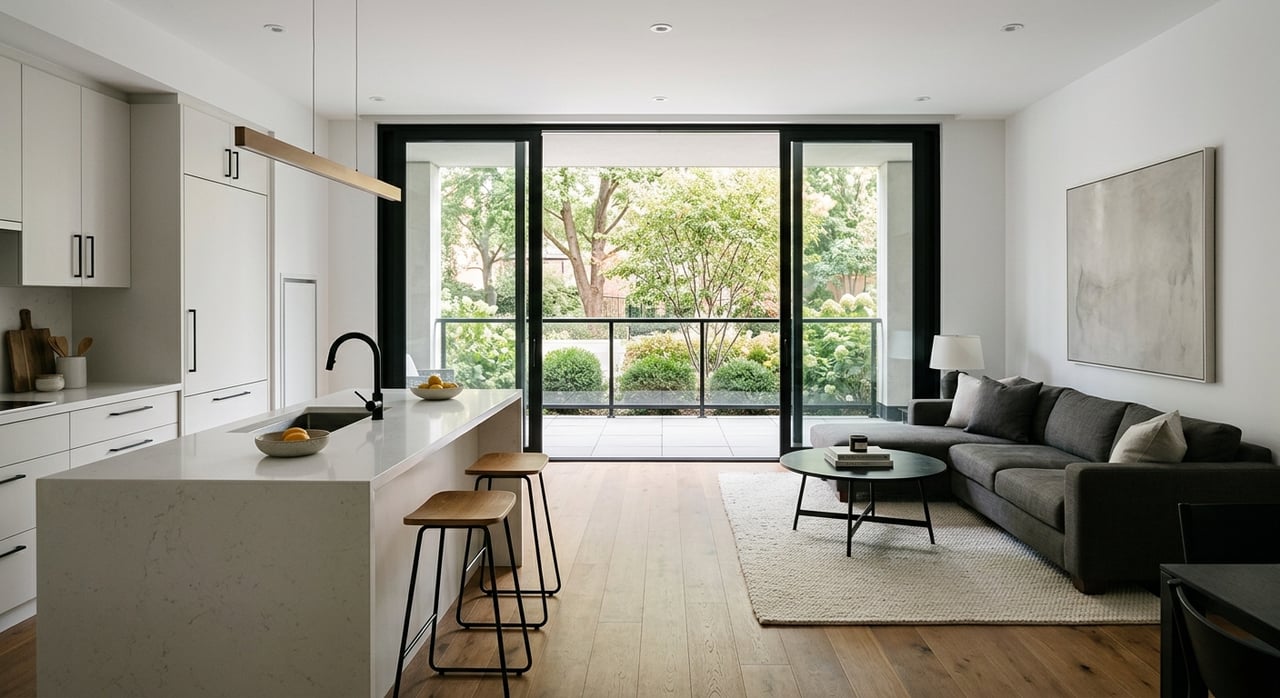
If you want a home that feels polished and practical without the full workload of a detached house, condo living in Bloomfield Hills may be worth a closer look. Many buyers are drawn to the idea of more manageable upkeep, appealing floor plans, and community amenities, but they also want to understand the tradeoffs before they make a move. In this guide, you’ll get a clear picture of what condo living can look like in the Bloomfield Hills area, what to watch for in the details, and how to shop with confidence. Let’s dive in.
Why condos stand out here
Bloomfield Hills is known for quiet residential character, wooded settings, privacy, and stately homes. In that context, condos offer a different path for buyers who want space and style with less day-to-day exterior maintenance.
In the broader Bloomfield Hills and Bloomfield Township market, condos are a relatively small part of the housing mix rather than the dominant option. Township planning data shows attached single-family residential accounts for 2.4% of acreage and multiple-family residential accounts for 1.7%, while single-family residential makes up 72.4%.
That matters because condo options here often feel more selective and varied. Instead of one standard product, you may find compact upper-level units, townhouse-style homes, and detached site-condo properties that live more like single-family homes.
Space comes in several forms
One of the biggest surprises for buyers is how much condo layouts can differ in the Bloomfield Hills search area. Some homes are designed for simplicity and efficiency, while others offer square footage that rivals a traditional house.
For example, local listings in the area have included a 2-bedroom, 2-bath upper-level condo around 1,063 square feet, as well as a 3-bedroom, 2.5-bath townhouse around 2,253 square feet with an attached garage and basement. Other examples include a ranch-style condo around 1,756 square feet with a den and deck access, plus a detached condo over 4,300 square feet with a first-floor primary suite, loft, and finished lower level.
Common condo formats
When you search in Bloomfield Hills, you may come across a few distinct types of condo properties:
- Stacked or upper-level condos with efficient layouts and shared-building living
- Townhouse-style condos with multiple levels, attached garages, and more separation between rooms
- Ranch-style condos that appeal to buyers seeking main-level living
- Detached condos or site condos that can look and feel closer to a standalone house
Michigan’s Condominium Buyers Handbook notes that the term site condominium is commonly used for detached housing rather than a multi-unit building. That means a home may look like a traditional house while still operating under condominium ownership and association rules.
Style and convenience often go together
Condo living in this area often appeals to buyers who want a lock-and-leave lifestyle. In township planning materials, mixed-use areas may include condominiums above first-floor retail or service uses, with shared parking and no-yard-maintenance living aimed at young adults and seniors.
Even outside mixed-use settings, the practical appeal is similar. You may be able to spend less time thinking about lawn care, snow removal, and exterior repairs, and more time enjoying the home itself.
That convenience can be especially attractive if you are downsizing, traveling often, or simply prefer a home with fewer outdoor responsibilities. It can also make the move from a larger detached property feel more manageable without giving up comfort or design.
Amenities can add real value
Many condo communities in the Bloomfield Hills area offer amenity packages that go beyond basic maintenance. Depending on the community, those features may play a major role in your day-to-day experience.
For example, Hills of Lone Pine describes amenities that include a 24-hour staffed gatehouse, pool, private tennis courts, lawn maintenance, snow removal and salting, community management, and landscaped walkways with water features. Wabeek Oaks highlights professional management, efficient grounds maintenance, and maintained landscaping.
Some communities also connect to optional club-style amenities. The Heathers Club offers a private 9-hole golf course, heated pool, tennis courts, clubhouse, dining spaces, and banquet facilities through separate membership, which is an important detail for buyers to understand.
Ask whether amenities are included
Not every feature you see in a community is automatically part of condo ownership. Before you buy, confirm:
- Which amenities are included in your dues
- Which features require separate membership or fees
- Whether access rules vary by unit type or phase
- How common areas are maintained and funded
That quick review can help you compare communities more accurately and avoid surprises after closing.
What condo dues may cover
Condo dues can feel easier to evaluate when you break them into actual services. In some local listings, dues covered major exterior and shared-property costs such as a gatehouse, exterior maintenance, windows, roof, pool, and tennis courts.
In other cases, maintenance fees covered heat, water, building insurance, cable, central air, and parking maintenance. That range shows why it is so important to avoid assumptions, even within the same general market.
What owners may still handle
Some associations place more responsibility on the owner than buyers expect. Depending on the governing documents, owners may still be responsible for items such as:
- Windows or doorwalls
- Balconies
- Patios or decks
- Certain interior systems or finishes
- Association rule compliance for exterior changes
The key takeaway is simple: always verify the exact boundary between association responsibilities and owner responsibilities before you move forward.
Rules are part of the lifestyle
Condo living offers convenience, but it also comes with shared-space expectations. Michigan law gives condominium associations a formal legal framework, and the state’s buyers handbook explains that associations are private entities that must keep records, maintain a reserve fund for major repairs, and provide access to core documents.
The handbook also explains that monthly fees and assessments are a lien on the unit, and owners generally cannot avoid paying common expenses simply because they do not use the common elements. For buyers, that makes document review more than a formality. It is part of understanding the real cost and structure of ownership.
Local rules can be very specific
Community rules in this market can cover much more than noise or trash day. In one Bloomfield-area example, rules addressed designated parking, decal display, guest parking use, overnight street parking, snow-event parking limits, auto repair restrictions, approval requirements for door and window replacements, pet limits, and rules for balconies, patios, pools, and trash handling.
That does not mean condo living is restrictive by default. It means you should expect structure, especially in communities with shared amenities and common spaces.
Condo living versus a house
If you are comparing a condo to a single-family home in Bloomfield Hills, the tradeoff is usually straightforward. You may gain lower exterior maintenance and access to amenities, but you give up some autonomy and take on dues, rules, and shared ownership of common elements.
For many buyers, that tradeoff makes sense. A condo can offer the location, design, and easier upkeep they want, especially if they no longer need a large yard or prefer a more simplified routine.
For others, a detached house may still be the better fit if privacy, flexibility, and fewer association rules are higher priorities. The right answer depends on how you actually want to live, not just the square footage on paper.
What to verify before you buy
Before you commit to any condo in the Bloomfield Hills area, make sure you look beyond the photos and floor plan. The governing details often shape your ownership experience just as much as the home itself.
Smart questions to ask
- What exactly do the dues cover?
- Is there a reserve fund for major repairs?
- Is there any history of special assessments?
- Is parking assigned, shared, or limited for guests?
- Are there restrictions on pets, rentals, or exterior changes?
- Is the property an attached condo, detached condo, or site condominium?
These questions can help you compare options on equal footing. They also give you a better sense of whether a specific community fits your budget, habits, and long-term plans.
Finding the right fit in Bloomfield Hills
Because condos make up a smaller slice of the local housing mix, the best match is often the one that aligns with your lifestyle first. You may want a compact unit with community amenities, a townhouse with extra space, or a detached condo that feels closer to a single-family home.
The good news is that the Bloomfield Hills area offers more variety than many buyers expect. With the right guidance, you can narrow the options quickly, ask sharper questions, and focus on homes that truly fit the way you want to live.
If you’re exploring condo living in Bloomfield Hills and want local guidance on communities, floor plans, and what to look for in the details, reach out to Raymond Matti for a free neighborhood consultation.
FAQs
What types of condos can you find in Bloomfield Hills?
- Buyers may find stacked condos, townhouse-style condos, ranch-style layouts, detached condos, and site condominium properties in the broader Bloomfield Hills search area.
What do Bloomfield Hills condo dues usually cover?
- Coverage varies by community, but local examples show dues may include exterior maintenance, roof work, windows, heat, water, building insurance, cable, parking maintenance, lawn care, snow removal, or amenity upkeep.
Are condo amenities included with every Bloomfield Hills unit?
- Not always. Some amenities may be included in association dues, while others, such as club access in certain communities, may require separate membership or added fees.
How are condo rules handled in Bloomfield Hills communities?
- Condo associations operate under Michigan’s condominium framework and may have detailed rules about parking, pets, exterior changes, balconies, patios, trash, and use of shared spaces.
Is a site condo in Bloomfield Hills the same as a traditional condo building?
- No. Michigan’s buyers handbook explains that a site condominium commonly refers to detached housing, even though it is still governed as a condominium.
Is a condo or a house better in Bloomfield Hills?
- It depends on your priorities. A condo may offer easier maintenance and shared amenities, while a single-family home may offer more autonomy and fewer association rules.